
Intelligence, Truth, and Prediction, not just Automation
Magic.
There is a specific, quiet thrill in watching a master of the craft.
It’s not just the trick.
It’s the feeling the performance creates.
The moment where logic suspends, and for a heartbeat, the impossible feels possible.
Everyone remembers the first time they felt that awe.
AND, every great performance depends on a hidden economy of craftsmanship: the power, the performer, and the stage.
Each plays a different role. Each matters.
But, only one holds the entire performance together.
In 2026, legal AI is caught in the middle of a world-class performance.
The headlines are full of flash:
- eye-watering valuations for legal AI companies,
- foundational models collapsing into the application layer,
- autonomous agents promising to compress hours of work into seconds.
But if you want to understand where the enduring value in a trillion-dollar legal market will accrue, you have to look past the lights, past the performers, past the engineers, and study the mechanics of the actual stage.
That is where the real market architecture is being built.
And…to understand the timing of the market shifts, we believe it’s important to understand that every great performance consists of three acts.
Act I: The Pledge
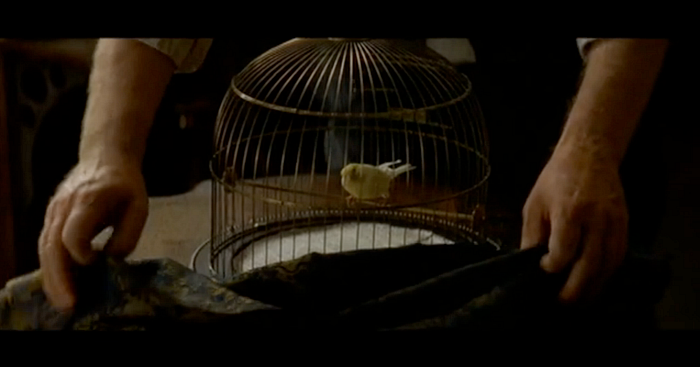
This is where the magician shows you something ordinary: a deck of cards, a bird, or, in legal, a lawyer.
In the first phase of this era, foundational models were the electricity. They were the raw, surging power that made the lights stay on. Without them, there is no performance.
Suddenly we had systems that could draft memos, summarize depositions, identify inconsistencies, and remove the brain-numbing burden of the first draft.
It looked like a miracle.
And it was.
The market responded exactly as you would expect: with a wave of point solutions and specialized startups selling a specific performance. AI for NDAs. AI for e-discovery. AI for intake. AI for litigation support.
These performances are exceptional.
They are fast, sleek, and increasingly capable. In narrow tasks, they already challenge human performance and capability. In time, in some categories, they will likely surpass it.
They provide immediate, measurable value.
But electricity is not ownership.
It’s raw power.
And raw power, however intoxicating, is not where the deepest value settles.
Act II: The Turn

This is the moment the magician makes something disappear.
In legal, this is the Agentic Era: the era where the billable hour comes under attack and the time required to complete work starts vanishing into autonomous workflows. We see agents navigating document systems, coordinating multi-step tasks, retrieving information, routing work, drafting outputs, and acting across fragmented tools.
The crowd is clapping because the impossible is now happening in seconds.
But every performance has its tells.
To understand why this act is still incomplete, you have to look carefully at what the performer is actually doing.
- The electricity: the performer is still plugging into foundational models they do not own to access the raw power.
- The props: the agents themselves are often weighted cards and hidden boxes, brilliantly designed for a specific maneuver, but still localized.
- The performer: these point solutions are the showmen. They step on stage, execute the trick, and exit.
That is what makes this era exciting. It is also what makes it fragile.
The weakness of the agentic era is a dual gap in context and governance.
Many agents simulate memory through temporary scaffolding.
They use retrieval to pull in snippets on the fly.
It works. Sometimes beautifully. But it is still the AI equivalent of a scratchpad: temporary, fragmented, and unanchored.
And once you get past memory, the deeper issue is canonical truth.
These performers, if they are not anchored to a stage with the right directions, become goldfish in a sophisticated AI package: not only forgetting what the litigation agent did while the NDA agent is drafting, but trying to read three different scripts at once.

Without a recognized source of truth, the agent does not just forget.
It hallucinates.
Wrong³
The worst case?
It pulls the wrong values from the wrong systems at the wrong time and delivers the answer with absolute confidence.
That is not a product issue.
That is an architecture issue.
When an agent tries to “remember” a settlement without a truth registry, it fills the gap with fabricated facts. Errors compound. Hallucinations cascade. And the whole thing is served back with a tone of certainty.
The performer may have a scratchpad.
But the Stage is the archive of all historical performances.
The agents don’t know the firm’s twenty-year history.
They don’t know the client’s specific risk tolerance.
And they definitely don’t know which exception was negotiated three matters ago, which billing reality conflicts with the document trail, or which internal precedent quietly governs the answer.
An agent with working memory is just a sophisticated renter bringing luggage to a hotel.
The Legal OS is the landlord who owns the hotel and the land itself.
Without a permanent system of record, these agents have phantom memory.
They provide immediate value, yes. And some will change the way the legal industry works in the future.
BUT, they still remain guests on a stage they do not own.
And in high-stakes work, an unanchored performer does not just look incomplete.
It becomes a liability.
Act III: The Prestige
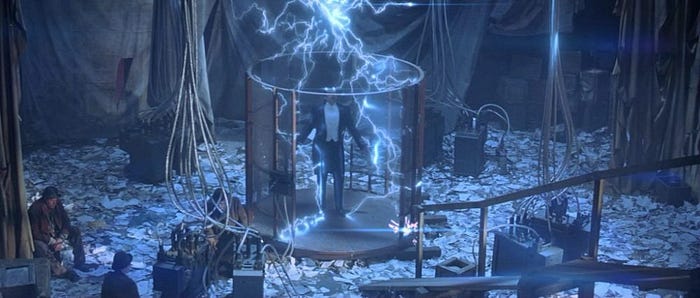
The hardest part.
This is the part where the magician brings the object back.
This is the part that creates real awe.
We believe this act will be about Probabilistic Prediction.
Not prediction as theater. Prediction as infrastructure.
Prediction as the product of governed intelligence built on proprietary truth.
And to do that act without risk of getting kicked off, you have to own the stage.
The long-term value in legal AI will not rest with the flashiest plugin or the slickest demo. It will rest with those building the stage: the Legal Operating System and the layer of systemic intelligence that sits on top of it.
This is the shift from renting to owning.
Point solutions rent intelligence.
The operating system owns the environment where intelligence becomes a compounding asset.
A true Prestige has sovereign governance: the ability to think inside a private vault that owns access to the data, controls permissions, and governs the rules of the road.
The Legal OS is not just a vault.
It’s the firm’s TRUTH REGISTRY.
It separates the flashy UX of work from the boring, indispensable truth required for work. While point solutions and agents dance across fragmented silos, the OS encodes what counts, what changed, what governs, and what cannot be violated.
Because in high-stakes law, the record is the only contract that matters.
We believe the shift from bespoke tasks to systemic intelligence requires three things:
Contextual Reliability: From Renter to Landlord
This is how you close the context gap.
Instead of dragging intelligence across fragmented systems, the Legal OS brings intelligence to the customer’s data behind its own wall. It remembers historical settlements, negotiation patterns, matter history, and institutional judgment.
It is not reconstructing memory every time.
It owns it.
Active Intelligence: From Archive to Advisor
This is how you close the governance gap.
When the system of record and the system of intelligence collapse into one architecture, the archive stops being passive storage and starts becoming an active advisor.
Historical work product becomes live judgment.
The system flags drafting conflicts, surfaces precedent, reconciles contradictions, and turns firm history into usable intelligence.
Predictive Outcomes: From Gut Feel to Math
This is where you shift from efficiency to intelligence to prediction.
Instead of relying on intuition alone, the system can access hidden signals buried across the full lifecycle of proprietary data: case management, billing, emails, documents, negotiation history, staffing patterns, matter trajectories, and outcomes.
That is what makes a statement like “there is an 85% probability this motion to dismiss succeeds” conceivable, not as a hallucinated answer from a generic model, but as a governed output built on the firm’s own record, its own history, and its own truth.
This act is not replacing the lawyer or their superpower: their judgment.
Rather, it’s about giving it x-ray vision.
The industry is evolving from:
- digital efficiency,
- to task-based automation,
- and next to systemic intelligence and probabilistic prediction.
That final shift is where the largest returns may accrue.
The Curtain Call
A Strategic Blueprint & Category Evolution
The “Model Wars” and the “Agent Wars” are the loud parts of the performance.
They keep the audience fixated.
But enduring value is being constructed in plain sight, where the infrastructure is laid.
The first act was simple AI assistance.
The current act is agentic workflow, where time vanishes but context remains rented and unanchored.
The final act, the Prestige, is when a firm governs its own intelligence well enough to predict the future.
That is why we believe the strategic investment is shifting toward systems that deliver probabilistic prediction and active intelligence.
In this landscape:
- the OS is the ENABLING ASSET,
- the systemic intelligence is the PRODUCT,
- the probabilistic prediction is the ALPHA.
We have seen this structural migration before.
A decade ago, go-to-market teams traded gut feel for probabilistic outcomes. They replaced sales rep intuition with attribution, weighted pipelines, and systems of record that made prediction possible. Platforms like Salesforce didn’t win because they looked magical. They won because they transformed fragmented data into a compounding asset and became the historical truth registry for an entire function.
Legal is now walking a version of that same path.
We don’t believe the next giants of legal AI will be the companies with the flashiest solutions.
They will be the architects who build the stage itself: the integrated operating systems that govern every case, every fact, every permission, and every decision.
Because if you are not building the stage, you may just be part of the audience.
Are you watching closely?